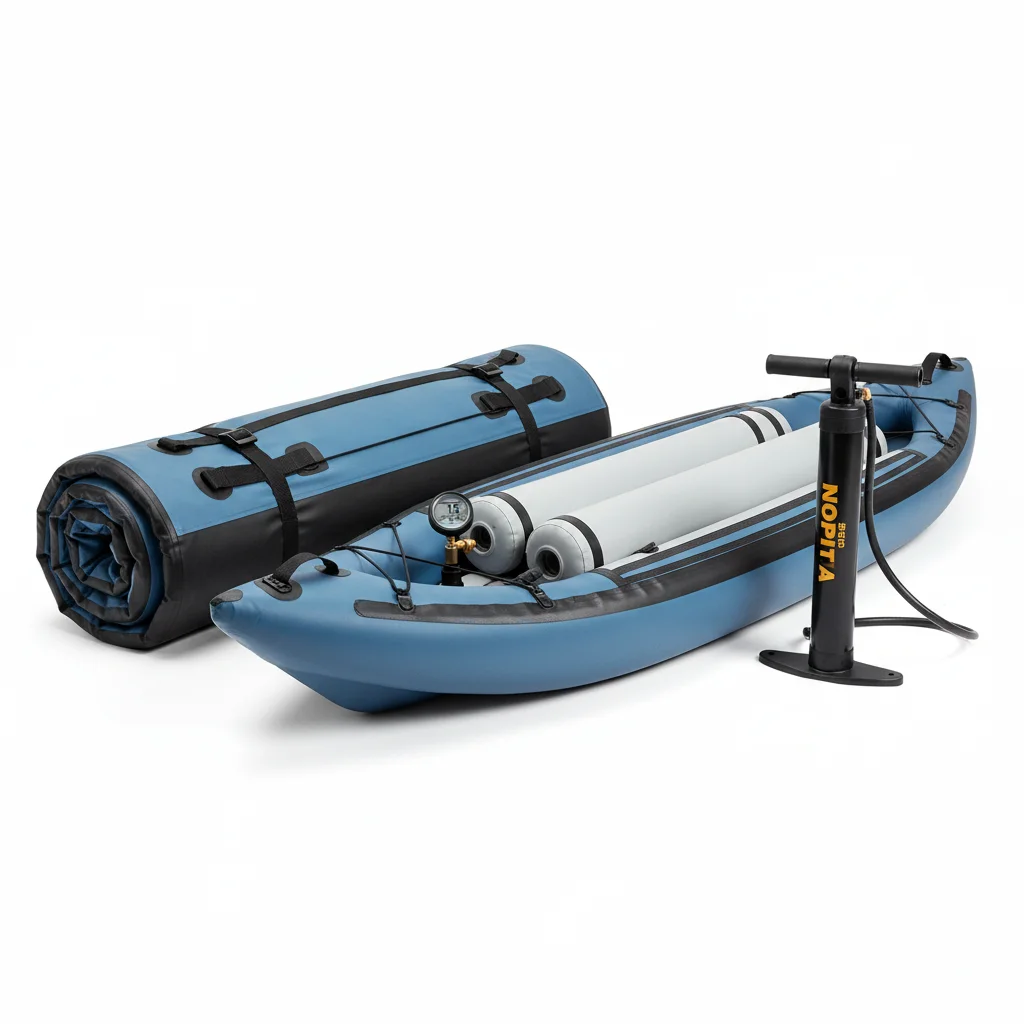
Understanding the correct inflatable kayak pressure is crucial for optimal performance and longevity. Most inflatable kayaks operate best within a specific PSI (pounds per square inch) range, typically between 1.0 and 3.0 PSI for the main chambers, and sometimes higher for drop-stitch floors, reaching up to 10-12 PSI. Over-inflation can stress seams and material, leading to damage, while under-inflation compromises stability and tracking. Always consult your kayak’s manufacturer specifications for the precise recommended pressure.
Why Proper PSI Matters for Inflatable Kayaks
Proper inflation pressure directly impacts an inflatable kayak’s rigidity, stability, and overall performance on the water. A correctly inflated kayak will feel firm to the touch, offering better tracking and responsiveness. This rigidity helps the kayak cut through water more efficiently, reducing drag and making paddling less strenuous. Conversely, an under-inflated kayak will feel soft and squishy, making it difficult to paddle in a straight line and increasing the risk of capsizing, especially in choppy conditions. For complete inflatable kayak library on this site.
Beyond performance, maintaining the correct PSI is vital for the structural integrity of your kayak. Over-inflation, particularly in hot weather, can cause the air inside to expand, putting immense strain on the seams and fabric. This can lead to leaks, seam separation, or even catastrophic ruptures. Under-inflation, while less immediately damaging, can cause excessive flexing of the material, leading to premature wear and tear over time.
Identifying Your Kayak’s Recommended PSI
The recommended PSI for your inflatable kayak is almost always printed directly on the kayak itself, often near the inflation valves, or clearly stated in the owner’s manual. This specification is critical because different kayak models and materials require varying pressures. For instance, kayaks with high-pressure drop-stitch floors will have a much higher recommended PSI for that specific component compared to the side chambers, which are typically made from PVC or Hypalon.
If you cannot find the PSI information on your kayak or in the manual, a good general guideline for main chambers is 1.5 to 2.5 PSI. However, this is a generalization, and relying on it without checking your specific model can lead to suboptimal performance or damage. Always prioritize the manufacturer’s guidance.
Tools for Accurate Inflation and Pressure Monitoring
|
Our Picks for the Best Inflatable Kayak in 2026
As an Amazon Associate I earn from qualifying purchases.
|
||
| Num | Product | Action |
|---|---|---|
| 1 | GYMAX Inflatable Kayak, 12.5Ft 507lbs Tandem Kayak with 2 Aluminum Paddles, 2 Padded Seats, Footrests, 2 Fins, Hand Pump, Carry Bag & Repair Kit, 2 Person Fishing Touring Kayak for Adults |

|
| 2 | Advanced Elements - AdvancedFrame Sport Inflatable Kayak - Lightweight Day Touring Kayak with Bag and Pump |
|
| 3 | INTEX Challenger Inflatable Kayak Series: Includes Deluxe 86in Kayak Paddles and High-Output Pump – SuperStrong PVC – Adjustable Seat with Backrest – Removable Skeg – Cargo Storage Net |
|
| 4 | Intex 68309EP Excursion Pro K2 Inflatable Kayak Set: Includes Deluxe 86in Kayak Paddles and High-Output Pump – SuperTough PVC – Adjustable Bucket Seat – 2-Person – 400lb Weight Capacity |
|
| 5 | Retrospec June Nano Kids Inflatable Fishing Paddle Board SUP Kayak: 9'6" Hybrid Paddleboard with Rod Holders, Removable Seat - Lightweight Portable Youth Fishing Board |
|
| 6 | INTEX 68324EP Excursion 4 Inflatable Boat Set: Includes Deluxe 54in Boat Oars and High-Output Pump – Adjustable Seats with Backrest – Fishing Rod Holders – 4-Person – 1100lb Weight Capacity |
|
| 7 | Intex 68307EP Explorer K2 Inflatable Kayak Set: Includes Deluxe 86in Aluminum Oars and High-Output Pump – SuperStrong PVC – Adjustable Seats with Backrest – 2-Person – 400lb Weight Capacity |
|
| 8 | INTEX Challenger Inflatable Kayak Series: Includes Deluxe 86in Kayak Paddles and High-Output Pump – SuperStrong PVC – Adjustable Seat with Backrest – Removable Skeg – Cargo Storage Net |
|
| 9 | Intex Challenger K1 Kayak Kit |
|
| 10 | INTEX 68303EP Excursion Pro K1 Inflatable Kayak Set: Includes Deluxe 86in Kayak Paddles and High-Output Pump – SuperTough PVC – Adjustable Bucket Seat – 1-Person – 220lb Weight Capacity |
|
To ensure your inflatable kayak is always at its optimal pressure, investing in the right inflation tools is essential. Most inflatable kayaks come with a hand or foot pump, but not all include an integrated pressure gauge. A reliable pressure gauge is your most important tool for accurate inflation.
- High-Volume Hand or Foot Pump: Essential for quickly inflating the main chambers. Look for models with a double-action feature for faster inflation.
- Electric Pump (with PSI setting): Offers convenience and speed, especially for larger kayaks. Ensure it has an auto-shutoff feature at the desired PSI to prevent over-inflation.
- In-line Pressure Gauge: If your pump doesn’t have one, an in-line gauge can be attached between the pump hose and the valve for precise readings.
- Valve Adapters: Ensure you have the correct adapters for your kayak’s specific valve types (e.g., Halkey-Roberts, Boston, Spring).
Always check the pressure before each use, especially if there have been significant temperature changes, as air expands and contracts with heat and cold.
Adjusting for Temperature Changes and Environmental Factors
Temperature plays a significant role in the internal pressure of your inflatable kayak. Air expands when heated and contracts when cooled. If you inflate your kayak to the recommended PSI in cool morning air and then leave it in direct sunlight for several hours, the internal pressure can increase significantly, potentially exceeding safe limits. Conversely, inflating in hot conditions and then paddling in cooler water can cause the pressure to drop.
It’s a good practice to slightly under-inflate your kayak if you know it will be exposed to intense sun, allowing room for expansion. If you’re launching in very cold water after inflating in warmer air, you might need to top off the air once the kayak has acclimated to the water temperature. Regularly checking the pressure with a gauge throughout your outing, especially on long trips or during significant weather changes, can prevent issues.
Common Mistakes to Avoid During Inflation
Several common mistakes can lead to problems with inflatable kayak pressure. The most frequent error is guessing the pressure without using a gauge. While a kayak might feel firm, it could still be under or over-inflated, leading to the issues discussed earlier.
Another mistake is inflating the kayak fully on land and then transporting it in a hot car or leaving it in direct sun for an extended period before launching. This can cause dangerous over-pressurization. Always inflate to the recommended PSI just before launching, or slightly below if you anticipate significant heat exposure. Also, ensure all valves are securely closed after inflation to prevent air loss during use. Neglecting to clean the valve area can also lead to slow leaks, so keep them free of sand and debris.

I appreciate the breakdown of PSI ranges, but I wish there was more specific advice for different brands. My Sea Eagle 370 has slightly different recommendations, and it’s sometimes hard to find a pump that accurately measures the lower PSI for the side chambers. I’ve had issues with under-inflation making it feel a bit wobbly, so getting it just right is a constant struggle.
I used to just eyeball my inflatable kayak’s pressure, but after reading about the importance of proper PSI, I finally invested in a good pump with a gauge. My Intex Explorer K2 feels so much more stable now, especially with the main chambers at a consistent 1.5 PSI. It tracks way better and I’m not constantly correcting my direction. Definitely a game changer for my weekend paddles.
This info on drop-stitch floors was super helpful! I always wondered why my Advanced Elements kayak felt so much firmer on the bottom than the sides. Knowing that those can go up to 10-12 PSI makes sense now. I’ve been a bit conservative with the pressure, but I’ll try inflating it to the higher end next time to see if I get even better performance.
I totally agree that over-inflation is a real concern. I once accidentally put too much air in my cheap Amazon special and heard a terrifying pop! Luckily, it was just a small seam, but it taught me a lesson. Now I always double-check the manufacturer’s specs and use a reliable gauge to keep my new Driftsun Rover at its optimal pressure. No more stressing the seams!