An inflatable kayak offers unparalleled freedom on the water, providing adventure without the typical storage and transport headaches of rigid boats. However, like any valuable outdoor gear, your inflatable kayak thrives on proper care. Neglecting maintenance can quickly lead to diminished performance, unsightly wear, and a significantly shortened lifespan. Understanding how to properly clean, store, and care for your inflatable kayak is not just about aesthetics; it’s about protecting your investment, ensuring safety, and guaranteeing countless more enjoyable outings on rivers, lakes, and oceans.
Why Inflatable Kayak Maintenance Matters
Maintaining your inflatable kayak is paramount to preserving its condition and ensuring a consistent, safe experience every time you paddle. Without diligent care, your kayak’s material can degrade, its seams can weaken, and its overall integrity can be compromised, leading to costly repairs or premature replacement.
Regular maintenance directly contributes to the longevity of your kayak. Factors like saltwater, sand, mud, and even the sun’s harsh UV rays can all contribute to wear and tear. A well-maintained kayak will not only last longer but will also perform better, retaining its optimal buoyancy and structural stability. Moreover, keeping your kayak in top shape is a safety imperative. Damaged seams, weakened materials, or faulty valves can pose significant risks on the water. By adhering to a routine maintenance schedule, you proactively identify and address potential issues, safeguarding both your gear and your well-being. Ultimately, proper care protects your investment, allowing you to maximize the enjoyment and value you get from your inflatable kayak for years to come.
Pre-Use Checks and Setup
Before every paddling adventure, a quick but thorough inspection of your inflatable kayak can prevent minor issues from becoming major problems on the water. This proactive approach ensures both your safety and the longevity of your equipment.
Inspecting for Damage
|
Our Picks for the Best Inflatable Kayak in 2026
As an Amazon Associate I earn from qualifying purchases.
|
||
| Num | Product | Action |
|---|---|---|
| 1 | GYMAX Inflatable Kayak, 12.5Ft 507lbs Tandem Kayak with 2 Aluminum Paddles, 2 Padded Seats, Footrests, 2 Fins, Hand Pump, Carry Bag & Repair Kit, 2 Person Fishing Touring Kayak for Adults |

|
| 2 | Retrospec June Nano Kids Inflatable Fishing Paddle Board SUP Kayak: 9'6" Hybrid Paddleboard with Rod Holders, Removable Seat - Lightweight Portable Youth Fishing Board |
|
| 3 | Intex Challenger K1 Kayak Kit |
|
| 4 | Intex 68307EP Explorer K2 Inflatable Kayak Set: Includes Deluxe 86in Aluminum Oars and High-Output Pump – SuperStrong PVC – Adjustable Seats with Backrest – 2-Person – 400lb Weight Capacity |
|
| 5 | Advanced Elements - AdvancedFrame Sport Inflatable Kayak - Lightweight Day Touring Kayak with Bag and Pump |
|
| 6 | INTEX 68303EP Excursion Pro K1 Inflatable Kayak Set: Includes Deluxe 86in Kayak Paddles and High-Output Pump – SuperTough PVC – Adjustable Bucket Seat – 1-Person – 220lb Weight Capacity |
|
| 7 | INTEX Challenger Inflatable Kayak Series: Includes Deluxe 86in Kayak Paddles and High-Output Pump – SuperStrong PVC – Adjustable Seat with Backrest – Removable Skeg – Cargo Storage Net |
|
| 8 | INTEX 68324EP Excursion 4 Inflatable Boat Set: Includes Deluxe 54in Boat Oars and High-Output Pump – Adjustable Seats with Backrest – Fishing Rod Holders – 4-Person – 1100lb Weight Capacity |
|
| 9 | INTEX Challenger Inflatable Kayak Series: Includes Deluxe 86in Kayak Paddles and High-Output Pump – SuperStrong PVC – Adjustable Seat with Backrest – Removable Skeg – Cargo Storage Net |
|
| 10 | Intex 68309EP Excursion Pro K2 Inflatable Kayak Set: Includes Deluxe 86in Kayak Paddles and High-Output Pump – SuperTough PVC – Adjustable Bucket Seat – 2-Person – 400lb Weight Capacity |
|
Always begin by unrolling and fully inspecting your kayak for any signs of damage. Look closely at the fabric for small punctures, abrasions, or scuffs that might have occurred during previous use or storage. Pay particular attention to the seams, where the material pieces are joined, as these can be vulnerable points. Check for any signs of fraying, peeling, or unusual wear. Examine the D-rings, grab handles, and any other attachment points to ensure they are securely fastened and show no signs of cracking or stretching. Addressing small issues like a pinhole leak or a loose fitting before you launch can save you from a frustrating and potentially hazardous situation.
Proper Inflation and Pressure Checks
Inflating your kayak correctly is critical for its performance and structural integrity. Always use the pump provided or recommended by the manufacturer and inflate the chambers to their specified PSI (pounds per square inch). Over-inflating can put undue stress on the seams and material, especially in warmer temperatures, potentially leading to ruptures. Conversely, under-inflating will make the kayak feel sluggish and unstable, compromising its maneuverability and efficiency. Many inflatable kayaks come with a pressure gauge, which is an invaluable tool for ensuring optimal inflation. Periodically check the air pressure during longer outings, particularly if temperatures fluctuate, as colder water can cause the air inside to contract, reducing pressure.
Securing Accessories
Once inflated, take a moment to ensure all accessories are correctly attached and secured. This includes seats, footrests, fins, and any bungee cords or cargo nets. Properly attaching seats ensures comfort and efficient paddling posture, while securely mounting fins is essential for tracking straight. Check that all drain plugs are firmly closed before launching, unless you are actively draining water in rough conditions where the self-bailing feature is intended. A misplaced fin or a loose seat can detract from your paddling experience or even be lost in the water, so a quick check goes a long way.
Post-Use Cleaning Essentials
The care your inflatable kayak receives immediately after use is just as important as its performance on the water. Proper post-use cleaning prevents long-term damage and keeps your kayak adventure-ready.
Rinsing and Drying Thoroughly
The most fundamental step after any outing is to thoroughly rinse your inflatable kayak with fresh water. This is especially crucial after paddling in saltwater, murky lakes, or sandy environments. Salt, sand, dirt, and aquatic debris can degrade the material over time, cause abrasions, and lead to mildew if left unchecked. Use a hose with a gentle spray to clean all surfaces, paying extra attention to seams, valves, handles, and bungee areas where dirt and salt tend to accumulate. After rinsing, the absolute most important step is to dry your kayak completely. Trapped moisture is the primary culprit behind mold, mildew, and fabric breakdown. Use a microfiber towel to wipe down all surfaces, and then air-dry the kayak in a shaded, well-ventilated area. Leaving the valves open during this process helps ensure that any residual moisture inside the air chambers can evaporate. If packing up quickly, ensure you dry it as much as possible and fully unroll it at home for complete drying before storage.
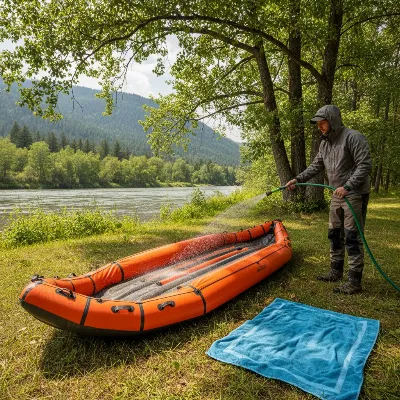 A person rinsing an inflatable kayak with fresh water and then drying it thoroughly in a shaded, well-ventilated area.
Cleaning Stubborn Stains and Mildew
For more stubborn dirt, grime, or the dreaded mold and mildew, a deeper clean is necessary. Use a soft sponge or cloth and a mild soap, such as dish soap, mixed with water. Avoid harsh chemicals, abrasive cleaners, or stiff brushes, as these can damage the kayak’s material or its protective coatings. Gently scrub the affected areas, working the soap into the stains. For persistent mold or mildew, a solution of white vinegar and water (50/50) or a very mild bleach solution can be effective, but always test it on an inconspicuous area first to ensure it doesn’t harm the fabric. After applying any cleaning solution, rinse the kayak thoroughly with fresh water to remove all residues and then dry it completely as described above. Proper cleaning not only maintains appearance but also prevents these contaminants from weakening the kayak’s fabric.
Air Valve Care
The air valves are critical components of your inflatable kayak, ensuring it stays inflated and performs safely. After each use, inspect the valves for any dirt, sand, or debris that might be lodged in the caps or within the valve mechanism itself. Clean them carefully with a damp cloth or a soft brush. Ensure the valve caps are free of grit and form a tight seal when closed. If you notice any air leaking from around the valve, it might need to be tightened or cleaned more thoroughly. Never force valves or use lubricants that aren’t specifically designed for inflatable boat valves, as this could damage the seals or material. Keeping your valves clean and functional is a simple step that significantly contributes to the kayak’s overall reliability.
Proper Storage Techniques
How you store your inflatable kayak when not in use significantly impacts its longevity and readiness for your next adventure. Incorrect storage can lead to material degradation, mold growth, and structural damage.
Deflating and Folding Correctly
Once your kayak is thoroughly cleaned and completely dry, it’s time to deflate and prepare it for storage. When deflating, ensure all air chambers are fully emptied. Many kayaks have Boston valves that allow for rapid deflation. Once mostly deflated, you can roll or fold the kayak to push out any remaining air. The key to folding is to avoid consistently creasing the material in the same spots. Over time, repeated stress on the same fold lines can lead to material fatigue and cracking. Try to vary your folding pattern with each storage. Fold the kayak loosely, rather than tightly compressing it, to minimize stress on the fabric and seams. If your kayak came with a carry bag, use it; these bags are designed to protect the kayak during transport and storage while allowing some airflow.
Ideal Storage Environment
The environment where you store your inflatable kayak is crucial. Always choose a cool, dry, and well-ventilated space, away from direct sunlight and extreme temperatures. High heat, such as that found in a hot garage or attic, can weaken the kayak’s seams, cause materials to expand excessively, and accelerate UV degradation, even when not inflated. Conversely, extreme cold can make the PVC or Hypalon material brittle and prone to cracking. A climate-controlled garage, a closet, or a dedicated storage shed are ideal. Avoid damp basements or areas with high humidity, as these create perfect breeding grounds for mold and mildew, even if the kayak was dry when stored. Keeping the kayak off the ground, perhaps on a shelf or pallet, further protects it from moisture and pests.
Protecting from Pests and UV Damage
While stored, your inflatable kayak needs protection not only from environmental factors but also from pests. Rodents and insects can chew through the material, causing irreparable damage. Storing it in its bag and off the floor in a clean environment can deter most pests. For long-term storage, especially if it will be exposed to any ambient light, consider using a UV protectant. Even indirect sunlight can contribute to the slow degradation of the material. Applying a specialized UV protectant spray, such as 303 Aerospace Protectant, periodically can significantly extend the life of your kayak by shielding the material from harmful ultraviolet radiation, preventing fading, discoloration, and embrittlement. Some experts recommend applying these products every 30-45 days during active use seasons, or as part of a winterization routine for prolonged storage.
Repairing Minor Damage
Even with the most meticulous care, accidents happen. Knowing how to quickly and effectively repair minor damage to your inflatable kayak can save your trip and extend your kayak’s life significantly.
Identifying Leaks
The first step in any repair is accurately locating the leak. For obvious tears, this is straightforward. For pinholes or slow leaks, inflation can help. Fully inflate the kayak and listen for hissing sounds. If the leak isn’t immediately audible, you can apply a soapy water solution to the suspected area. Bubbles will form at the source of the leak, clearly indicating the puncture. Some sources even suggest submerging sections of the inflated kayak in calm water and watching for bubbles, although this is less practical for larger kayaks. Once the leak is identified, mark it clearly with a non-permanent marker or a piece of masking tape before deflating the kayak for repair.
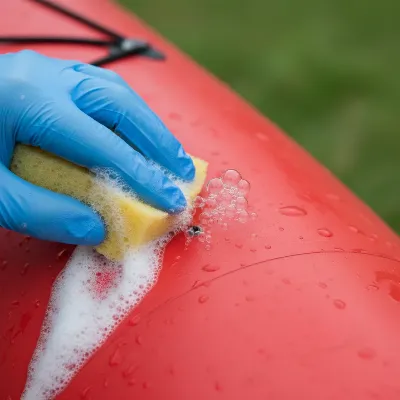 A person using soapy water to find a leak on an inflatable kayak, showing bubbles forming at the puncture site.
Patching Small Holes and Tears
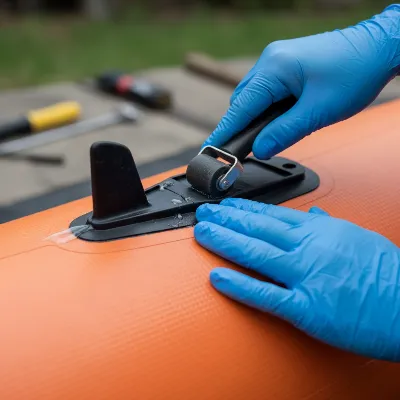
Most inflatable kayaks come with a repair kit, which typically includes patches and adhesive. If not, purchase a kit specifically designed for your kayak’s material (PVC, Hypalon, or Nitrilon), as glues are material-specific.
- Prepare the Surface: Deflate the kayak. Clean the area around the leak thoroughly with mild soap and water to remove any dirt, oil, or residue. Let it dry completely. For better adhesion, lightly sand the area around the hole with fine-grit sandpaper, then wipe away any dust.
- Cut the Patch: Cut a patch that is roughly twice the size of the hole, ensuring it has rounded corners. Rounded edges are less likely to peel up over time than straight ones.
- Apply Adhesive: Apply a thin, even layer of the recommended adhesive to both the patch and the prepared area on the kayak. Allow the glue to become slightly tacky according to the adhesive’s instructions (usually a few minutes).
- Apply the Patch: Carefully place the patch over the hole, pressing down firmly from the center outwards to eliminate air bubbles. Use a roller or even a spoon to apply even pressure across the entire patch.
- Cure Time: This is critical. Allow the patch to cure completely for the time specified by the adhesive manufacturer, typically 12-24 hours, before re-inflating the kayak. Rushing this step can result in a failed repair.
When to Seek Professional Repair
While many minor punctures can be fixed at home, some damage warrants professional attention. If the tear is large (over 75mm), located on a seam, or if you’ve attempted a repair that hasn’t held, it’s often best to consult an inflatable boat repair center. Seam repairs, especially, require specialized knowledge and equipment to ensure the structural integrity of the kayak. Additionally, if you frequently find new leaks or experience persistent issues despite regular maintenance, a professional can thoroughly inspect your kayak for manufacturing defects or widespread material fatigue that might not be obvious. A professional repair can extend your kayak’s life significantly and ensure it remains safe for use.
Seasonal Maintenance and Winterization
To truly maximize the lifespan of your inflatable kayak, seasonal maintenance and proper winterization are essential. These routines go beyond simple post-use cleaning, preparing your kayak for extended periods of storage or heavy use.
Deep Cleaning Routine
Beyond regular rinsing, implement a deep cleaning routine at least once a season or before long-term storage. Fully inflate your kayak and use a mild, environmentally safe cleaner specifically designed for inflatable boat materials. Pay close attention to every nook and cranny, including under seats, inside drain plugs, and along all seams. This deep clean removes built-up grime, residue from environmental pollutants, and any microscopic organisms that might be starting to form. Thoroughly rinse away all cleaning solution and ensure the kayak is bone-dry before proceeding to the next steps. This prevents long-term staining and material degradation.
Applying UV Protectant
One of the most damaging elements for inflatable kayaks is prolonged exposure to ultraviolet (UV) radiation from the sun. UV rays can cause the material to fade, crack, and become brittle, weakening seams and compromising the kayak’s structural integrity. Before storing your kayak for an extended period or at the start of a new season, apply a high-quality UV protectant. Products like 303 Aerospace Protectant are widely recommended for PVC, Hypalon, and Nitrilon materials. Spray the entire dry surface of the kayak generously, then wipe it clean with a dry, soft cloth. This creates a protective barrier that repels UV rays, dirt, and staining. Some manufacturers recommend applying UV protectant every 30-45 days during peak usage or as part of a comprehensive winterization process to keep the material supple and resilient.
Long-Term Storage Preparation
Preparing your inflatable kayak for long-term storage, often referred to as winterization, is a critical step in preserving its condition. After the deep clean and UV protectant application, ensure the kayak is absolutely dry, both inside and out. Remove all accessories like seats, fins, and footrests, and clean and dry them separately. Store small accessories in a dedicated bag to keep them organized and protected. When deflating the kayak, roll or fold it loosely, avoiding sharp creases in the same places each time. Store the deflated kayak in its original bag or a breathable storage container. The ideal storage location is cool, dry, dark, and well-ventilated, such as a climate-controlled garage or indoor storage unit. Avoid attics, damp basements, or areas exposed to extreme temperature fluctuations or direct sunlight. Some even suggest storing the kayak slightly inflated (but not fully pressurized) to minimize stress on the material folds, though fully deflated is also common practice.
> “Investing a little time in kayak maintenance ensures many more years of adventure. Skipping it is like driving a car without oil; it won’t last.” – Captain Alex Waters, Founder of “Paddle Power Guides”
Conclusion
The joy of owning an inflatable kayak lies in its versatility and ease of use, but these benefits are sustained only through consistent and thoughtful maintenance. From the critical routine of rinsing and thoroughly drying after every use to strategic long-term storage and timely repairs, each step plays a vital role in preserving your kayak’s integrity. By adopting these essential maintenance tips—performing pre-use checks, mastering cleaning techniques, ensuring proper storage, and knowing how to handle minor repairs—you not only protect your investment but also guarantee countless more safe and enjoyable adventures on the water. How will these maintenance habits transform your next kayaking experience?
Frequently Asked Questions
How often should I clean my inflatable kayak?
You should rinse your inflatable kayak with fresh water after every use, especially after paddling in saltwater. A deeper clean with mild soap and water is recommended every few outings or whenever it appears particularly dirty or muddy.
Can I leave my inflatable kayak inflated for extended periods?
While leaving it inflated for short periods between uses is generally fine, it is best to fully deflate, clean, and dry your inflatable kayak for long-term storage to prevent stress on seams and valves and to protect the material from environmental factors.
What is the best way to prevent mold and mildew on my inflatable kayak?
The most effective way to prevent mold and mildew is to ensure your kayak is completely dry, both inside and out, before deflating and storing it. Storing it in a cool, dry, and well-ventilated area away from humidity is also crucial.
How do I protect my inflatable kayak from UV damage?
Protect your Inflatable Kayak from UV damage by storing it out of direct sunlight when not in use and by regularly applying a marine-grade UV protectant spray like 303 Aerospace Protectant, especially before long-term storage or during peak sun exposure.
What should I do if my inflatable kayak gets a small puncture?
For a small puncture, first locate it using soapy water. Then, clean and dry the area, lightly sand it, cut a rounded patch (twice the size of the hole), apply a compatible adhesive to both surfaces, and press firmly. Allow 12-24 hours for the patch to cure completely.