Repairing a puncture on an inflatable kayak is a straightforward process that typically takes 15-30 minutes for preparation and application, followed by a curing time of 8-48 hours for a permanent seal. This guide provides essential steps for leak detection, surface preparation, patch application, and proper curing to ensure your inflatable kayak remains watertight and ready for adventure.
Understanding Inflatable Kayak Punctures
Inflatable kayaks are built with durable materials designed to withstand various aquatic environments, but they are not entirely immune to damage. Punctures can arise from a multitude of sources, ranging from sharp submerged objects and jagged rocks to abrasive surfaces and even accidental encounters with pet claws. Over-inflation or prolonged exposure to direct sunlight can also weaken the material, making it more susceptible to tears. Understanding these common culprits helps in both preventing damage and anticipating where a leak might occur.
A timely repair is paramount for several reasons. Beyond the immediate inconvenience of a deflating kayak, an untreated puncture can compromise the structural integrity of the vessel, leading to larger tears or even catastrophic failure. Prompt action ensures your safety, prolongs the lifespan of your inflatable kayak, and maintains its optimal performance on the water.
Essential Tools for Fast Inflatable Kayak Repair
Having a well-stocked repair kit is your first line of defense against punctures. While many inflatable kayaks come with a basic kit, understanding its contents and potentially augmenting it is essential for a fast and reliable fix.
Here’s a list of crucial items for your repair arsenal:
- Repair Patches: Always carry several, ideally matching your kayak’s material and color.
- Appropriate Adhesive: This is critical. Inflatable kayaks are typically made from PVC, Hypalon (CSM), or Nitrilon. Ensure your glue is compatible with your specific kayak material for a strong, lasting bond. PVC glue, for instance, will not adhere to rubber-based materials.
- Cleaning Solution: Isopropyl alcohol or mild soap and water are excellent for preparing the repair area.
- Fine-Grit Sandpaper: Used for lightly abrading the surface around the puncture to help the adhesive bond better.
- Marking Tool: A pencil, permanent marker, or masking tape helps clearly identify the leak location.
- Scissors: For cutting patches to the correct size and shape.
- Roller or Spoon: Essential for applying even pressure to the patch and removing air bubbles.
- Valve Wrench (if applicable): For tightening or inspecting valves, a common source of slow leaks.
- Gloves: To protect your hands from adhesives.
Investing in a quality repair kit, specifically designed for your kayak’s material, will save you time and frustration when a puncture inevitably occurs.
How to Quickly Locate a Leak on Your Inflatable Kayak
Finding a leak, especially a small one, can sometimes feel like searching for a needle in a haystack. However, several effective methods can help you pinpoint the exact location quickly.
Start by fully inflating your kayak until it is firm. For obvious leaks, you might hear a distinct hissing sound, or even see the damage. For more elusive punctures, use the following techniques:
- The Soapy Water Method: Mix dish soap with water in a spray bottle or bucket. Spray or brush the soapy mixture generously over the suspected areas, including seams, valves, and the entire surface of the inflatable chambers. Watch carefully for bubbles forming, which will indicate where air is escaping. Mark any bubble clusters with your marking tool.
- Submersion Test: If feasible, especially for smaller kayaks, fully submerge a section of the inflated kayak in calm, shallow water. Look for streams of tiny bubbles rising to the surface, signaling the leak’s location.
- Listen Carefully: In a quiet environment, slowly pass your ear over the surface of the inflated kayak. You might detect a faint hissing sound even from a pinhole leak.
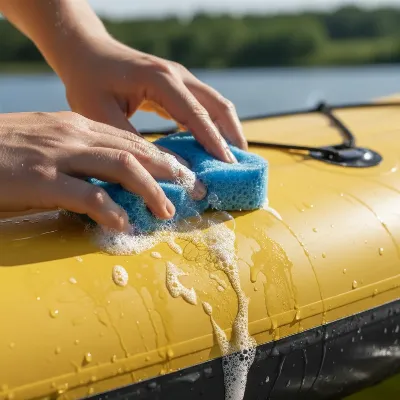 A person demonstrating how to find an inflatable kayak leak using soapy water and a sponge.
Don’t forget to inspect the valves thoroughly. Valves are a common culprit for slow air loss. Spray soapy water directly around the valve stem and base. If bubbles appear, try tightening the valve with a specialized wrench. If the leak persists, the valve’s internal components or O-rings might need cleaning or replacement. Always address all identified leaks at once for a comprehensive repair.
Step-by-Step Guide to Patching Your Inflatable Kayak
Once the leak is located and marked, you’re ready to proceed with the actual repair. Precision and patience are key to a durable fix.
Prepare the Surface and Patch
|
Our Picks for the Best Inflatable Kayak in 2026
As an Amazon Associate I earn from qualifying purchases.
|
||
| Num | Product | Action |
|---|---|---|
| 1 | Intex 68309EP Excursion Pro K2 Inflatable Kayak Set: Includes Deluxe 86in Kayak Paddles and High-Output Pump – SuperTough PVC – Adjustable Bucket Seat – 2-Person – 400lb Weight Capacity |

|
| 2 | Advanced Elements - AdvancedFrame Sport Inflatable Kayak - Lightweight Day Touring Kayak with Bag and Pump |
|
| 3 | INTEX Challenger Inflatable Kayak Series: Includes Deluxe 86in Kayak Paddles and High-Output Pump – SuperStrong PVC – Adjustable Seat with Backrest – Removable Skeg – Cargo Storage Net |
|
| 4 | Retrospec June Nano Kids Inflatable Fishing Paddle Board SUP Kayak: 9'6" Hybrid Paddleboard with Rod Holders, Removable Seat - Lightweight Portable Youth Fishing Board |
|
| 5 | INTEX Challenger Inflatable Kayak Series: Includes Deluxe 86in Kayak Paddles and High-Output Pump – SuperStrong PVC – Adjustable Seat with Backrest – Removable Skeg – Cargo Storage Net |
|
| 6 | Intex Challenger K1 Kayak Kit |
|
| 7 | INTEX 68324EP Excursion 4 Inflatable Boat Set: Includes Deluxe 54in Boat Oars and High-Output Pump – Adjustable Seats with Backrest – Fishing Rod Holders – 4-Person – 1100lb Weight Capacity |
|
| 8 | Intex 68307EP Explorer K2 Inflatable Kayak Set: Includes Deluxe 86in Aluminum Oars and High-Output Pump – SuperStrong PVC – Adjustable Seats with Backrest – 2-Person – 400lb Weight Capacity |
|
| 9 | GYMAX Inflatable Kayak, 12.5Ft 507lbs Tandem Kayak with 2 Aluminum Paddles, 2 Padded Seats, Footrests, 2 Fins, Hand Pump, Carry Bag & Repair Kit, 2 Person Fishing Touring Kayak for Adults |
|
| 10 | INTEX 68303EP Excursion Pro K1 Inflatable Kayak Set: Includes Deluxe 86in Kayak Paddles and High-Output Pump – SuperTough PVC – Adjustable Bucket Seat – 1-Person – 220lb Weight Capacity |
|
Begin by deflating the affected chamber of your inflatable kayak completely. This creates a flat, stable surface for the repair. Next, thoroughly clean the area around the leak with mild soap and water, or isopropyl alcohol/acetone, to remove any dirt, oil, or grime. Allow the area to dry completely. Lightly sand the area around the puncture and the back of your chosen patch with fine-grit sandpaper. This roughs up the surface, providing a better grip for the adhesive. After sanding, wipe away any dust.
For cutting the patch, always aim for a size that is roughly double the size of the hole, or at least 2 inches larger than the damage. Cut the patch into a circular or oval shape. Straight edges are more prone to peeling over time, whereas rounded edges create a more secure seal. For larger tears (over 3 inches or 75mm), consider an inside and outside patch for maximum security, or consult a professional if you’re unsure.
Apply the Adhesive and Patch
With your surface prepared and patch cut, it’s time for the adhesive. Read the specific instructions on your chosen repair kit, as curing times and application methods can vary. Generally, you will apply a thin, even coat of adhesive to both the prepared kayak surface and the back of the patch. Allow the glue to become tacky, which usually takes a few minutes, but always refer to the adhesive’s guidelines.
Carefully place the patch over the hole, ensuring it covers the entire damaged area and overlaps significantly onto the clean, prepped surface. Press down firmly, working from the center of the patch outwards to push out any trapped air bubbles. A small roller, or even the back of a spoon, can be effective for applying consistent pressure and achieving a smooth, flat bond. Avoid applying excessive pressure that squeezes out too much glue, as this can weaken the bond.
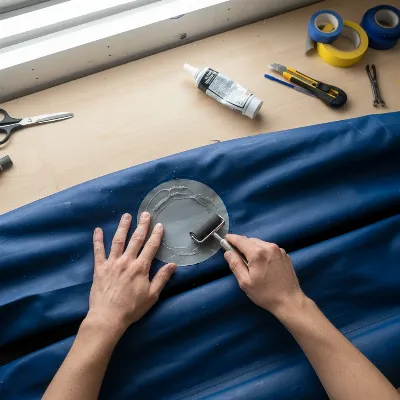 Hands carefully applying a circular patch to an inflatable kayak, ensuring a smooth, air-bubble-free repair.
Curing for a Durable Fix
The curing process is arguably the most critical step for a long-lasting repair. Rushing this stage can lead to a failed patch. Curing times vary widely depending on the adhesive type and environmental conditions. Some UV-activated glues cure in as little as 5 minutes when exposed to sunlight, making them excellent for emergency on-water fixes. Other epoxies or urethane adhesives may require 8-12 hours, or even 24-48 hours, to achieve full strength.
Always follow the manufacturer’s recommendations for curing time. Performing repairs indoors or in a shaded, well-ventilated area, away from direct sunlight and strong winds, is often ideal. Once the recommended curing time has passed, re-inflate the kayak chamber to its proper pressure. Re-test the patched area with soapy water to confirm that the leak has been completely sealed. If bubbles still appear, you may need to apply another layer of adhesive or a new, larger patch.
Emergency On-Water Kayak Puncture Fixes
Sometimes, a puncture happens when you’re far from your workshop. Knowing how to perform an emergency field repair can be the difference between paddling back safely and a long, wet walk.
For immediate, temporary fixes, quick-curing adhesives like UV-activated glues are invaluable. These can create a seal in minutes under sunlight, allowing you to re-inflate and continue your journey to shore for a more permanent repair. Heavy-duty waterproof tapes, such as Tenacious Tape or even Gorilla Tape, can also provide a temporary seal over small holes or tears. Simply clean and dry the area as best as possible, apply the tape, and press firmly.
These emergency methods are designed to get you out of a bind, not to be permanent solutions. Always plan for a proper, thoroughly cured patch repair as soon soon as you are back on land. Carry an emergency repair kit with you on every paddling trip, including quick-fix tapes and a compatible adhesive.
Preventing Future Punctures and Kayak Maintenance
The best repair is one you never have to make. Diligent care and maintenance can significantly reduce the likelihood of punctures and extend the life of your inflatable kayak.
- Careful Handling: Avoid dragging your kayak over rough terrain. Always lift it, or use a cart, to transport it over land. Be mindful of sharp objects, both on shore and in the water.
- Proper Inflation: Do not over-inflate your kayak, as this puts undue stress on the seams and material, making it more vulnerable to punctures and tears. Use a pressure gauge to ensure correct PSI.
- Thorough Cleaning: After every use, rinse your kayak with fresh water to remove sand, salt, and debris. This prevents abrasive particles from wearing down the material and keeps it free from mold and mildew.
- Complete Drying: Before storing, ensure your kayak is completely dry, inside and out. Leaving moisture can lead to mold, mildew, and material degradation. Consider leaving it partially inflated in a dry, shaded area for a few days to ensure all internal moisture evaporates.
- UV Protection: UV rays can degrade inflatable kayak materials over time. Apply a UV protectant spray (like 303 Aerospace Protectant) every 1-2 months to shield the material from sun damage and maintain its flexibility.
- Correct Storage: Store your deflated, clean, and dry kayak in a cool, dry place, away from direct sunlight and extreme temperatures. If storing outdoors, keep it off the ground and cover it with a breathable tarp.
By adhering to these maintenance practices, your inflatable kayak will remain a reliable companion for countless adventures.
Frequently Asked Questions
What kind of glue should I use for my inflatable kayak?
The type of glue you use is critical and must match your inflatable kayak’s material. Most kayaks are made of PVC, Hypalon (CSM), or Nitrilon. Always check your kayak’s owner’s manual or contact the manufacturer to confirm the material and recommended adhesive. Using an incompatible glue can lead to a failed repair.
How long does an inflatable kayak patch need to cure?
Curing times vary significantly depending on the adhesive. Some fast-acting UV-activated glues can cure in minutes under sunlight for emergency fixes. However, for a permanent, strong bond, most standard adhesives require 8-12 hours, or even 24-48 hours, to fully cure. Always follow the specific instructions on your repair kit.
Can I repair a large tear on my inflatable kayak myself?
Small punctures (up to about 2-3 inches or 75mm) are typically manageable with a DIY repair kit. For larger tears, especially those exceeding 2 inches, or damage to seams, it is often recommended to seek professional repair or apply an inside and outside patch for added security. A significant tear might compromise the kayak’s structural integrity if not repaired expertly.
How do I find a slow leak that’s hard to hear?
For slow or elusive leaks, the “soapy water test” is highly effective. Fully inflate your kayak and then spray or brush a mixture of dish soap and water over the entire surface, paying close attention to seams and valves. Watch for tiny bubbles forming, which indicate the exact location of the air leak.
Is it necessary to sand the area before applying a patch?
Yes, lightly sanding the area around the puncture and the back of the patch with fine-grit sandpaper is generally recommended. This process, called abrading, creates a slightly rougher surface that allows the adhesive to bond more securely and effectively, leading to a much stronger and longer-lasting repair.
How to Patch an Inflatable Kayak Puncture
This guide outlines the steps to effectively patch a puncture on your inflatable kayak, ensuring a durable and watertight repair.
Completely deflate the affected chamber of your kayak. Clean the area around the leak with mild soap and water or isopropyl alcohol, then let it dry. Lightly sand the area and the back of your patch with fine-grit sandpaper to improve adhesive bonding. Cut the patch into a circular or oval shape, at least 2 inches larger than the hole.
Apply a thin, even coat of compatible adhesive to both the prepared kayak surface and the back of the patch. Allow the glue to become tacky according to the manufacturer's instructions. Carefully place the patch over the hole, pressing firmly from the center outwards to remove air bubbles. Use a roller or spoon for consistent pressure.
Allow the patch to cure for the recommended time, which can range from 8 to 48 hours depending on the adhesive and environmental conditions. Avoid rushing this step, as proper curing is crucial for a long-lasting repair. Once cured, re-inflate the kayak and re-test the patched area with soapy water to confirm the leak is sealed.

Fantastic resource! I’ve always been a bit intimidated by repairing my Sea Eagle, but the step-by-step instructions made it feel manageable. The tip about cleaning the area thoroughly before applying the patch was something I hadn’t focused on enough before, and it really made a difference in getting a strong, permanent seal.
This guide was a lifesaver! I had a small leak near a seam on my Intex Challenger and thought I’d have to buy a new one. The detailed steps for leak detection, especially the soapy water trick, helped me pinpoint it quickly. After following the patch application instructions, my kayak is good as new. Definitely saved me a lot of money.
Good info overall, especially about avoiding over-inflation to prevent future tears. I had a minor puncture from a pet claw (my dog loves coming along!), and while the guide helped with the repair, the 8-48 hour curing time is a bit of a bummer when you want to get back on the water quickly. Still, it’s better than a leaky kayak.
I appreciated the clear breakdown of curing times. I always wondered if I was waiting long enough after patching. My Advanced Elements kayak got a tiny hole from some sharp rocks last weekend, and the advice on surface preparation made a big difference. It’s holding air perfectly now, though I wish there was a bit more info on different patch kit types.