Are you tired of your inflatable kayak zig-zagging in windy conditions or struggling to maintain a straight course? Many inflatable kayaks, while incredibly versatile and portable, can benefit significantly from an aftermarket skeg to improve tracking and paddling efficiency. This comprehensive guide, crafted from years of hands-on experience, will walk you through a fast and effective DIY process to install a skeg on your inflatable kayak, transforming your paddling experience.
What is an Inflatable Kayak Skeg?
An inflatable kayak skeg is a fin-like attachment positioned on the underside of your kayak, typically towards the stern. Its primary purpose is to enhance straight-line tracking by providing lateral resistance against the water. This resistance prevents “weathercocking,” a common phenomenon where wind or currents push the kayak’s stern, causing the bow to turn into the wind. Unlike a rudder, which is controlled by foot pedals for steering, a skeg is a fixed or adjustable fin designed purely for directional stability. Most DIY skeg installations involve gluing a fin box or base to the hull, into which a removable fin can be inserted.
Why Add a Skeg to Your Inflatable Kayak?
Adding a skeg to your inflatable kayak offers numerous advantages, making your time on the water more enjoyable and less strenuous.
Enhanced Tracking and Stability
|
Our Picks for the Best Inflatable Kayak in 2026
As an Amazon Associate I earn from qualifying purchases.
|
||
| Num | Product | Action |
|---|---|---|
| 1 | GYMAX Inflatable Kayak, 12.5Ft 507lbs Tandem Kayak with 2 Aluminum Paddles, 2 Padded Seats, Footrests, 2 Fins, Hand Pump, Carry Bag & Repair Kit, 2 Person Fishing Touring Kayak for Adults |

|
| 2 | Intex 68307EP Explorer K2 Inflatable Kayak Set: Includes Deluxe 86in Aluminum Oars and High-Output Pump – SuperStrong PVC – Adjustable Seats with Backrest – 2-Person – 400lb Weight Capacity |
|
| 3 | Intex 68309EP Excursion Pro K2 Inflatable Kayak Set: Includes Deluxe 86in Kayak Paddles and High-Output Pump – SuperTough PVC – Adjustable Bucket Seat – 2-Person – 400lb Weight Capacity |
|
| 4 | Advanced Elements - AdvancedFrame Sport Inflatable Kayak - Lightweight Day Touring Kayak with Bag and Pump |
|
| 5 | INTEX Challenger Inflatable Kayak Series: Includes Deluxe 86in Kayak Paddles and High-Output Pump – SuperStrong PVC – Adjustable Seat with Backrest – Removable Skeg – Cargo Storage Net |
|
| 6 | INTEX 68324EP Excursion 4 Inflatable Boat Set: Includes Deluxe 54in Boat Oars and High-Output Pump – Adjustable Seats with Backrest – Fishing Rod Holders – 4-Person – 1100lb Weight Capacity |
|
| 7 | Retrospec June Nano Kids Inflatable Fishing Paddle Board SUP Kayak: 9'6" Hybrid Paddleboard with Rod Holders, Removable Seat - Lightweight Portable Youth Fishing Board |
|
| 8 | Intex Challenger K1 Kayak Kit |
|
| 9 | INTEX 68303EP Excursion Pro K1 Inflatable Kayak Set: Includes Deluxe 86in Kayak Paddles and High-Output Pump – SuperTough PVC – Adjustable Bucket Seat – 1-Person – 220lb Weight Capacity |
|
| 10 | INTEX Challenger Inflatable Kayak Series: Includes Deluxe 86in Kayak Paddles and High-Output Pump – SuperStrong PVC – Adjustable Seat with Backrest – Removable Skeg – Cargo Storage Net |
|
A skeg acts as an underwater anchor, significantly improving your kayak’s ability to hold a straight line. This is particularly noticeable in open water or when encountering crosswinds and currents, where without a skeg, you might find yourself constantly correcting your course with paddle strokes. The added stability helps counteract the tendency for your kayak’s bow to turn into the wind, allowing for a more predictable and controlled glide across the water.
Improved Paddling Efficiency
When your kayak tracks straight, you expend less energy on corrective strokes. This means more of your effort goes directly into propelling the kayak forward, leading to greater efficiency and less fatigue, especially during longer excursions. A skeg can make a noticeable difference in reducing the physical demand of paddling, allowing you to cover more distance with ease.
Versatility for Different Conditions
While not always necessary in calm, sheltered waters, a skeg becomes invaluable in challenging conditions. For instance, in open water, lakes, or coastal areas with wind and waves, a skeg provides the much-needed directional control. Many skeg systems are removable, offering flexibility: you can attach it for better tracking in open water and easily detach it for navigating shallow rivers or whitewater where a fin could get snagged or damaged.
Essential Tools and Materials for Skeg Installation
Before you begin, gather all necessary tools and materials to ensure a smooth and efficient installation process.
- Skeg Kit: This includes the skeg fin and the fin box or base that will be glued to your kayak. Ensure it’s compatible with your kayak’s material (e.g., PVC-to-PVC for most inflatables).
- Adhesive: A high-quality marine-grade adhesive is crucial. Options include Stabond glue, HH-66 cement, or a specific PVC-to-PVC or urethane adhesive, depending on your kayak’s material. Always check the manufacturer’s recommendations.
- Cleaning Supplies: Denatured alcohol or isopropyl alcohol and several clean, lint-free rags are essential for preparing the surface.
- Preparation Tools: You’ll need masking tape (painter’s tape is ideal), a tape measure, a string, a marker pen, and fine-grit sandpaper (e.g., 180-220 grit).
- Application Tools: A small paintbrush or stirring stick for applying glue, a heat gun or hair dryer (highly recommended for heat-activated glues like Stabond), a weighted roller (optional, but helps ensure good adhesion), and protective gloves for handling adhesives.
- Weight: Bricks, sandbags, or other heavy objects to apply consistent pressure during the curing phase.
Step-by-Step Guide: Fast DIY Skeg Installation
Installing a skeg is a straightforward process if you follow these steps carefully. Taking your time with each stage will ensure a durable and effective bond.
Step 1: Prepare Your Work Area and Gather Supplies
Choose a well-ventilated area, preferably outdoors or in a garage with open doors, as the adhesives can emit strong fumes. Lay down a drop cloth or newspaper to protect your workspace from glue spills. Inflate your kayak to a soft pressure—enough to hold its shape, but not fully rigid. This allows for easier manipulation and ensures a flatter surface for the skeg base.
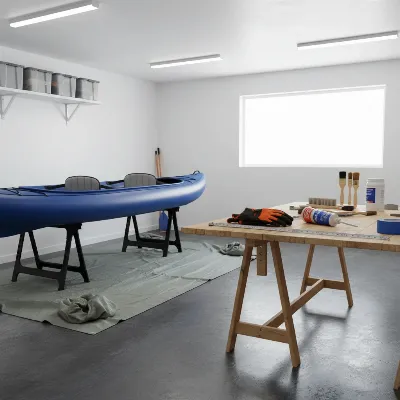 Preparing the work area for inflatable kayak skeg installation with tools laid out
Step 2: Determine Optimal Skeg Placement
The skeg is typically installed at the stern of the kayak, centered on the keel line. For single-person kayaks, a common measurement might be around 25-27 inches from the stern end of the floor pocket. For tandem kayaks, this could be closer to 31-33 inches. However, consult your skeg kit’s instructions for precise measurements, as these can vary.
To ensure perfect alignment, tie a string tightly between the front and rear D-rings of your kayak. This string will serve as your center line. Place your skeg template (if provided, or the fin box itself) over the string and align it with your measured stern position. It’s crucial that the skeg is perfectly straight to ensure optimal tracking. Also, consider how your kayak folds when deflated and avoid placing the skeg base on a fold line, as this can stress the bond over time.
Step 3: Clean and Scuff the Surface
This is one of the most critical steps for strong adhesion. Using a clean rag dampened with denatured alcohol or isopropyl alcohol, thoroughly clean the area on the kayak where the skeg base will attach. Allow it to dry completely. Next, lightly scuff both the kayak surface and the bottom of the skeg base with fine-grit sandpaper. This creates a textured surface for the glue to bond to. After scuffing, wipe both surfaces again with alcohol to remove any dust or debris, and let them dry fully.
Step 4: Mark and Mask the Installation Area
Once the placement is finalized, use a marker to trace the outline of the skeg base onto the kayak. Then, apply masking tape around this traced outline, creating a clean boundary. This tape protects your kayak from excess glue and helps keep your application neat. Remove the center string once the area is marked and taped.
Step 5: Apply Adhesive
If using a two-part adhesive like Stabond, mix it according to the manufacturer’s instructions in a well-ventilated area. Using a paintbrush or stir stick, apply a thin, even coat of glue to both the prepared area on the kayak and the bottom of the skeg base. Ensure full coverage without excessive pooling.
Allow the first coat to dry to the touch (typically 10-20 minutes, depending on the glue and environmental conditions). Once dry, apply a second thin, even coat to both surfaces. For some glues, you’ll wait for this second coat to become “tacky” (sticky but not wet) before proceeding. For others, like Stabond, you might let it dry completely and then reactivate it with heat.
Step 6: Heat Activate (If Necessary) and Attach the Skeg Base
If your adhesive requires heat activation (common with PVC glues), use a heat gun or hair dryer on a low setting to gently warm both the glue on the kayak and on the skeg base until it becomes slightly bubbly or tacky again. Be careful not to overheat the material.
Working quickly, align the skeg base with your marked outline, starting from the bow end of the patch (the end closer to the front of the kayak). Carefully press the patch down, slowly working your way towards the stern, ensuring there are no air bubbles trapped underneath. Use a weighted roller or firm hand pressure to roll or press out any bubbles and achieve maximum contact between the patch and the kayak.
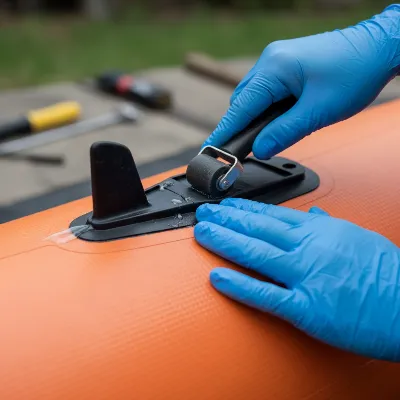 Attaching a skeg base to an inflatable kayak with glue and a roller
Step 7: Cure and Finalize
Once the skeg base is firmly attached, carefully peel off the masking tape before the glue fully cures to prevent it from bonding to the tape. Place bricks, sandbags, or other weights evenly over the newly installed skeg base to apply constant pressure during the curing process. Leave the weights in place for at least 24 hours, or as recommended by your adhesive manufacturer, to allow the glue to fully cure and achieve its maximum bond strength.
After the curing period, gently remove the weights. Your new skeg base is now ready! You can then slide your skeg fin into the installed fin box and secure it with the locking pin or mechanism.
Maintaining Your Inflatable Kayak Skeg
Proper maintenance will extend the life of your skeg and ensure optimal performance.
Proper Usage
Always remove your skeg fin during transportation and storage. Leaving it attached can cause damage to the fin or the fin box, especially when the kayak is deflated and folded. While skegs are excellent for tracking, they are generally not suitable for shallow or rocky waters, where they can get damaged or impede your progress. In such conditions, it’s best to remove the skeg for greater maneuverability and to protect it.
Cleaning and Storage
After each use, rinse both the skeg fin and the fin box with fresh water to remove any salt, sand, or debris. Allow them to dry completely before storage. Store the fin separately in a protective bag to prevent scratches or bending. Periodically inspect the skeg base for any signs of wear, peeling, or damage to the bond. Promptly address any issues with appropriate repairs to prevent further damage.
Conclusion
Installing a skeg on your inflatable kayak is a relatively simple DIY project that can dramatically improve your paddling experience. By following these steps—from meticulous surface preparation and precise placement to careful adhesive application and proper curing—you can enhance your kayak’s tracking, reduce paddling effort, and enjoy greater stability on the water. With your new skeg, you’ll find yourself gliding straighter and more efficiently, making every outing more enjoyable. What adventures will you embark on now that your kayak tracks like a dream?
Frequently Asked Questions
Can I install a skeg on any inflatable kayak?
Most inflatable kayaks with a relatively flat surface at the stern can accommodate a glue-on skeg system. However, it’s always best to check with your kayak’s manufacturer or the skeg kit provider for compatibility and material recommendations, as some specialized materials may require specific adhesives.
How long does the installation process take?
The active installation process (cleaning, gluing, attaching) can take 1-2 hours. However, the most critical part is the curing time for the adhesive, which typically requires at least 24 hours, and sometimes up to 72 hours, before the kayak can be used. This ensures a strong, lasting bond.
What kind of glue should I use?
The type of glue depends on your Inflatable Kayak’s material. For most PVC kayaks, a PVC-to-PVC adhesive or a specialized marine-grade glue like Stabond or HH-66 cement is recommended. Always check the adhesive’s instructions and ensure it’s compatible with both your kayak and the skeg base material for optimal results.
Does a skeg affect turning?
Yes, a skeg is designed to help your kayak track straighter, which means it will naturally make turning slightly less agile. While it won’t prevent you from turning, you might notice a larger turning radius compared to paddling without a skeg. This trade-off is often worthwhile for the improved stability and efficiency on open water.
Can a skeg be removed after installation?
The skeg fin itself is almost always removable from the installed fin box or base. However, the fin box/base that is glued to the kayak is intended to be a permanent fixture. While it might be possible to remove it with specialized tools and solvents, it’s not designed for regular removal and reattachment.