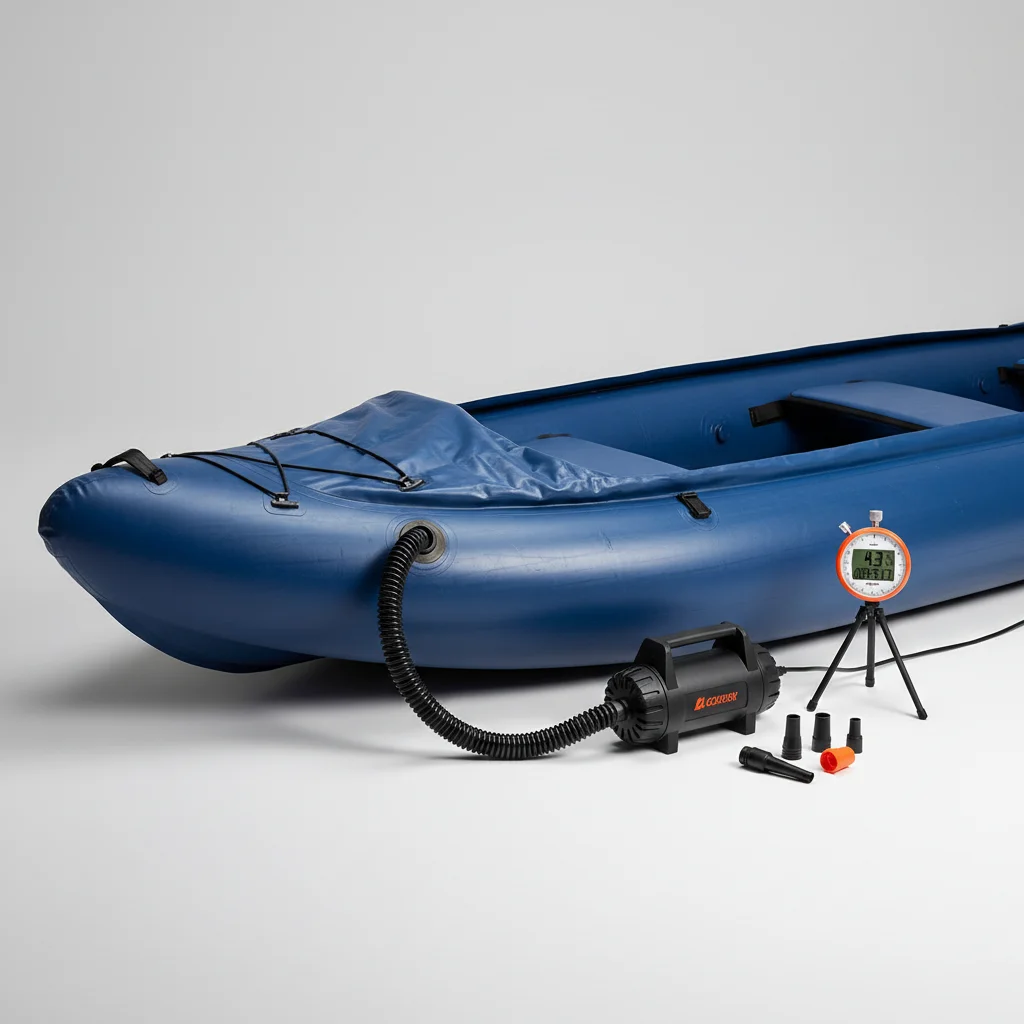
Inflating an inflatable kayak typically takes between 5 to 15 minutes, depending on the pump type, kayak size, and your personal efficiency. While some smaller, single-person models can be ready in under 5 minutes with an electric pump, larger tandem kayaks or those inflated manually might require closer to 15 minutes of effort. Understanding the factors that influence inflation time can help you prepare for your paddling adventures more effectively.
Factors Affecting Inflation Time
Several key elements determine how quickly your inflatable kayak is ready for the water. The most significant factors include the type of pump used, the overall volume of air required for the kayak, and the number of inflation chambers. A high-volume, low-pressure pump is generally recommended for inflatable kayaks to prevent over-inflation and damage.
For instance, a compact recreational kayak with a single main chamber will inflate much faster than a multi-chamber touring kayak designed for two people. Always consult your kayak’s manual for recommended PSI levels and inflation procedures to ensure optimal performance and safety.
Manual vs. Electric Pumps: A Time Comparison
The choice between a manual and an electric pump significantly impacts inflation time. Manual hand or foot pumps, while reliable and requiring no external power, typically take longer and demand more physical effort. A single-person kayak might take 10-15 minutes with a manual pump, whereas a tandem model could extend to 20 minutes or more.
Electric pumps, on the other hand, offer convenience and speed. A 12V electric pump can inflate most single-person kayaks in 5-8 minutes and tandem kayaks in 8-12 minutes. Some advanced electric pumps feature automatic shut-off when the desired PSI is reached, preventing over-inflation. Consider the power source availability when choosing an electric pump, as some require a car battery or portable power bank.
Tips for Faster and More Efficient Inflation
|
Our Picks for the Best Inflatable Kayak in 2026
As an Amazon Associate I earn from qualifying purchases.
|
||
| Num | Product | Action |
|---|---|---|
| 1 | GYMAX Inflatable Kayak, 12.5Ft 507lbs Tandem Kayak with 2 Aluminum Paddles, 2 Padded Seats, Footrests, 2 Fins, Hand Pump, Carry Bag & Repair Kit, 2 Person Fishing Touring Kayak for Adults |

|
| 2 | Intex Challenger K1 Kayak Kit |
|
| 3 | Retrospec June Nano Kids Inflatable Fishing Paddle Board SUP Kayak: 9'6" Hybrid Paddleboard with Rod Holders, Removable Seat - Lightweight Portable Youth Fishing Board |
|
| 4 | INTEX Challenger Inflatable Kayak Series: Includes Deluxe 86in Kayak Paddles and High-Output Pump – SuperStrong PVC – Adjustable Seat with Backrest – Removable Skeg – Cargo Storage Net |
|
| 5 | Intex 68309EP Excursion Pro K2 Inflatable Kayak Set: Includes Deluxe 86in Kayak Paddles and High-Output Pump – SuperTough PVC – Adjustable Bucket Seat – 2-Person – 400lb Weight Capacity |
|
| 6 | Intex 68307EP Explorer K2 Inflatable Kayak Set: Includes Deluxe 86in Aluminum Oars and High-Output Pump – SuperStrong PVC – Adjustable Seats with Backrest – 2-Person – 400lb Weight Capacity |
|
| 7 | Advanced Elements - AdvancedFrame Sport Inflatable Kayak - Lightweight Day Touring Kayak with Bag and Pump |
|
| 8 | INTEX Challenger Inflatable Kayak Series: Includes Deluxe 86in Kayak Paddles and High-Output Pump – SuperStrong PVC – Adjustable Seat with Backrest – Removable Skeg – Cargo Storage Net |
|
| 9 | INTEX 68303EP Excursion Pro K1 Inflatable Kayak Set: Includes Deluxe 86in Kayak Paddles and High-Output Pump – SuperTough PVC – Adjustable Bucket Seat – 1-Person – 220lb Weight Capacity |
|
| 10 | INTEX 68324EP Excursion 4 Inflatable Boat Set: Includes Deluxe 54in Boat Oars and High-Output Pump – Adjustable Seats with Backrest – Fishing Rod Holders – 4-Person – 1100lb Weight Capacity |
|
To minimize the time spent inflating your inflatable kayak, consider these practical tips. Proper preparation and technique can shave valuable minutes off your setup time, getting you on the water sooner.
- Pre-stage your pump and kayak in a clear, flat area.
- Ensure all valves are clean and free of debris for a secure connection.
- Inflate chambers in the recommended order (often floor first, then side chambers).
- Use a pressure gauge to monitor PSI and avoid over-inflation.
- If using a manual pump, maintain a steady, consistent pumping rhythm.
Investing in a good quality pump with appropriate adapters for your kayak’s valves can also make a substantial difference. Some kayaks come with proprietary valves, so confirm compatibility before purchasing a new pump.
Maintaining Your Kayak for Optimal Inflation
Regular maintenance not only extends the life of your inflatable kayak but also ensures efficient inflation. Keeping valves clean and free of sand or salt residue prevents air leaks and ensures a tight seal. Periodically check the integrity of your kayak’s fabric for any small punctures or weak spots that could lead to slow leaks, which would necessitate re-inflation during your trip.
Proper storage, such as keeping the kayak deflated, clean, and dry in a temperate environment, prevents material degradation that could affect inflation performance over time. A well-maintained kayak will hold air better and inflate more predictably.
The Importance of Proper PSI
Achieving the correct PSI (pounds per square inch) is crucial for both the performance and longevity of your inflatable kayak. Under-inflating can lead to a soft, unstable kayak that tracks poorly and is difficult to paddle. Over-inflating, conversely, can stress seams and material, potentially leading to ruptures, especially in warm weather when air expands.
Always refer to your kayak’s manufacturer specifications for the recommended PSI. Using a reliable pressure gauge, often integrated into higher-quality pumps or available as a separate accessory, is essential for accurate inflation. This ensures your kayak is firm enough for optimal rigidity and safety without risking damage.
For a reliable electric pump that makes inflation a breeze, check out the. If you’re looking for a durable manual pump that’s perfect for remote locations, theis an excellent choice.

Good breakdown of inflation times. I’ve got a smaller, single-person kayak and with my electric pump, I can usually get it ready in about 6-7 minutes. It’s not quite under 5 minutes like some of the compact recreational kayaks mentioned, but it’s still super quick. Definitely makes getting on the water less of a chore.
This was super helpful! I just got my first inflatable kayak and was worried about the setup time. Understanding that factors like kayak size and pump type play a big role really put my mind at ease. I’m definitely going to invest in a good electric pump to speed things up for my larger model.
I appreciate the tips on pump types. I’ve been using a foot pump and it feels like it takes forever, definitely closer to the 15-minute mark even for my single-person kayak. I wish there was a bit more detail on specific high-volume, low-pressure pump recommendations, as mine seems to struggle a bit. Still, good to know my experience isn’t unusual.
I always wondered if I was just slow, but this really clarified things. My tandem kayak with a manual pump usually takes me about 12-13 minutes, which is right in line with the 15-minute estimate for larger models. Knowing that helps me plan my launch time better and not feel rushed. Great info!