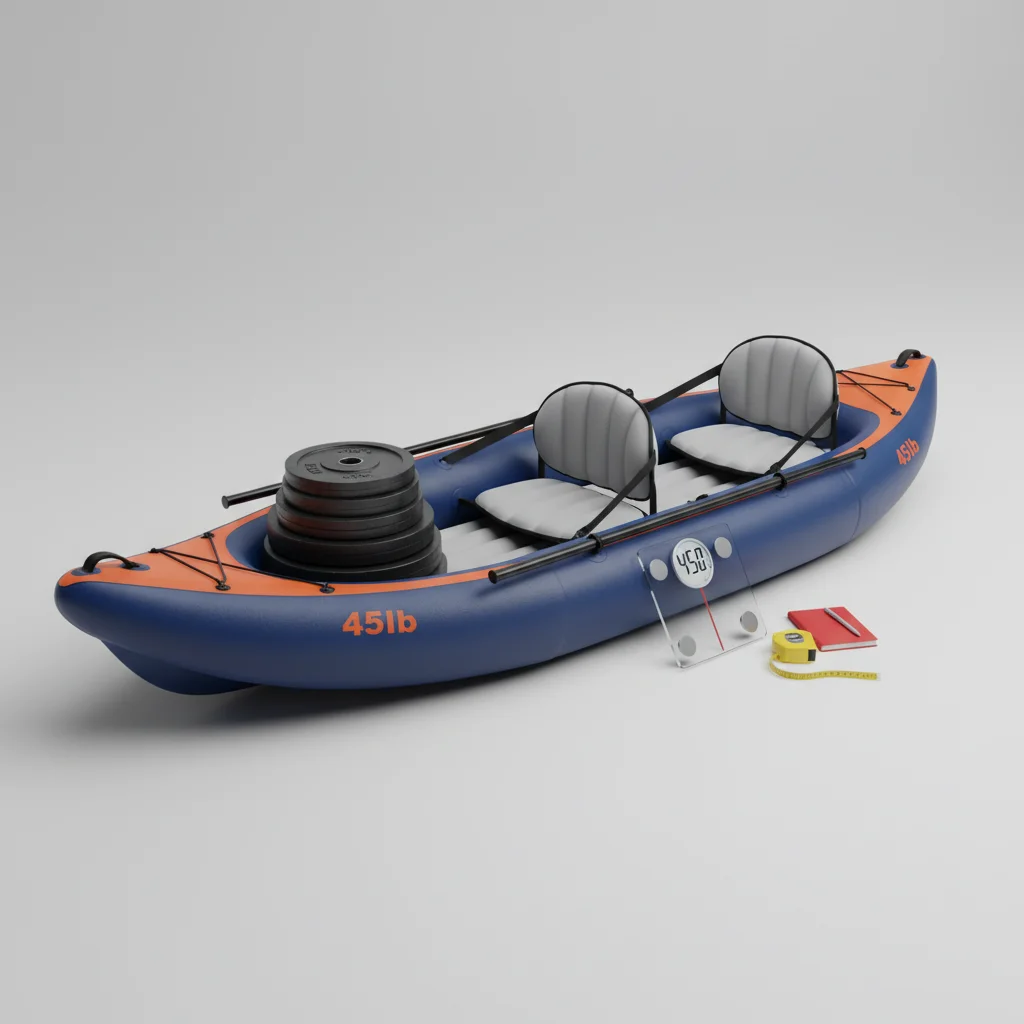
Most recreational inflatable kayaks can safely hold between 300 to 500 pounds, depending on their design and intended use. This capacity includes the paddler(s), all gear, pets, and any other items brought aboard. Exceeding this limit compromises stability, maneuverability, and can lead to structural damage or capsizing, making it crucial to understand your inflatable kayak’s weight capacity for safety and performance.
Factors Influencing Weight Capacity
Several design elements contribute to an inflatable kayak’s overall weight capacity. The number of air chambers, the thickness and durability of the PVC or Hypalon material, and the overall length and width of the kayak all play significant roles. Tandem kayaks, for instance, are built with larger dimensions and more robust construction to accommodate two paddlers and their combined gear, often boasting capacities upwards of 600 pounds. Conversely, compact single-person models designed for quick trips might have a lower capacity around 250-300 pounds. For more inflatable kayak guides on this site.
The floor type also impacts capacity and stability. Drop-stitch floors, common in higher-end models, offer a rigid platform that distributes weight more evenly and allows for higher pressure, contributing to a greater weight limit and improved performance. I-beam floors, while still effective, are generally found in more budget-friendly options and may offer slightly less rigidity and a lower capacity.
Calculating Your Load for Safe Paddling
To ensure you stay within your kayak’s limits, it’s essential to accurately calculate your total load. This involves summing the weight of all occupants, including yourself, any passengers, and pets. Don’t forget to factor in all your gear: paddles, life vests, coolers, fishing equipment, dry bags, and any other essentials. A good rule of thumb is to leave a buffer of at least 10-15% below the stated maximum capacity to account for unexpected items or water absorption by gear.
Always check the manufacturer’s specifications, usually found in the owner’s manual or on the product’s tag. These figures are based on rigorous testing and provide the safest guidelines for operation. Ignoring these limits can lead to a less enjoyable experience and potentially dangerous situations on the water.
Consequences of Exceeding Weight Limits
|
Our Picks for the Best Inflatable Kayak in 2026
As an Amazon Associate I earn from qualifying purchases.
|
||
| Num | Product | Action |
|---|---|---|
| 1 | INTEX 68324EP Excursion 4 Inflatable Boat Set: Includes Deluxe 54in Boat Oars and High-Output Pump – Adjustable Seats with Backrest – Fishing Rod Holders – 4-Person – 1100lb Weight Capacity |

|
| 2 | GYMAX Inflatable Kayak, 12.5Ft 507lbs Tandem Kayak with 2 Aluminum Paddles, 2 Padded Seats, Footrests, 2 Fins, Hand Pump, Carry Bag & Repair Kit, 2 Person Fishing Touring Kayak for Adults |
|
| 3 | INTEX Challenger Inflatable Kayak Series: Includes Deluxe 86in Kayak Paddles and High-Output Pump – SuperStrong PVC – Adjustable Seat with Backrest – Removable Skeg – Cargo Storage Net |
|
| 4 | Intex 68309EP Excursion Pro K2 Inflatable Kayak Set: Includes Deluxe 86in Kayak Paddles and High-Output Pump – SuperTough PVC – Adjustable Bucket Seat – 2-Person – 400lb Weight Capacity |
|
| 5 | Advanced Elements - AdvancedFrame Sport Inflatable Kayak - Lightweight Day Touring Kayak with Bag and Pump |
|
| 6 | INTEX Challenger Inflatable Kayak Series: Includes Deluxe 86in Kayak Paddles and High-Output Pump – SuperStrong PVC – Adjustable Seat with Backrest – Removable Skeg – Cargo Storage Net |
|
| 7 | Intex Challenger K1 Kayak Kit |
|
| 8 | INTEX 68303EP Excursion Pro K1 Inflatable Kayak Set: Includes Deluxe 86in Kayak Paddles and High-Output Pump – SuperTough PVC – Adjustable Bucket Seat – 1-Person – 220lb Weight Capacity |
|
| 9 | Intex 68307EP Explorer K2 Inflatable Kayak Set: Includes Deluxe 86in Aluminum Oars and High-Output Pump – SuperStrong PVC – Adjustable Seats with Backrest – 2-Person – 400lb Weight Capacity |
|
| 10 | Retrospec June Nano Kids Inflatable Fishing Paddle Board SUP Kayak: 9'6" Hybrid Paddleboard with Rod Holders, Removable Seat - Lightweight Portable Youth Fishing Board |
|
Overloading an inflatable kayak can lead to a range of problems, from minor inconveniences to serious safety hazards. The most immediate effect is reduced performance: the kayak will sit lower in the water, making it harder to paddle, less responsive to steering, and significantly slower. This increased drag can quickly tire paddlers and make navigating currents or wind much more challenging.
More critically, exceeding the weight capacity compromises the kayak’s stability, increasing the risk of capsizing, especially in choppy water or during turns. It can also put undue stress on seams and material, potentially leading to leaks, punctures, or even catastrophic failure of the kayak’s structure over time. Always prioritize safety over carrying extra gear.
Tips for Maximizing Your Kayak’s Capacity
- Distribute weight evenly: Place heavier items in the center and balance the load from front to back.
- Use lightweight gear: Opt for compact, lightweight versions of essential items whenever possible.
- Pack only what’s necessary: Evaluate each item and leave non-essentials on shore.
- Consider a larger kayak: If you consistently find yourself near the limit, investing in a kayak with a higher capacity is a wise choice.
- Utilize external storage: Some kayaks allow for gear to be secured to D-rings or bungee cords on the deck, but be mindful of how this affects balance.
For those looking for a versatile option that balances capacity with portability, consider the. It offers a generous weight limit suitable for solo or tandem adventures, making it a popular choice among paddlers who carry a moderate amount of gear. Its robust construction ensures durability even when approaching its maximum load.
If your adventures often involve heavier loads or multiple passengers, a heavy-duty model like themight be more appropriate. Designed with reinforced materials and a wider beam, it provides exceptional stability and a higher weight capacity, perfect for extended trips or fishing expeditions where extra gear is a must. Always match your kayak to your intended use and load requirements for the best experience.
Frequently Asked Questions
What is the average weight capacity for an inflatable kayak?
The average weight capacity for most recreational inflatable kayaks ranges from 300 to 500 pounds. This figure includes all occupants, gear, and pets, and varies based on the kayak's design and construction materials.
How do I calculate the total load for my inflatable kayak?
To calculate your total load, sum the weight of all occupants (yourself, passengers, pets) and all gear (paddles, life vests, coolers, dry bags). It is recommended to leave a buffer of 10-15% below the stated maximum capacity.
What happens if I exceed my inflatable kayak's weight limit?
Exceeding the weight limit can lead to reduced performance, making the kayak harder to paddle and slower. More critically, it compromises stability, increasing the risk of capsizing, and can cause structural damage like leaks or punctures over time.
Do different floor types affect an inflatable kayak's capacity?
Yes, different floor types affect capacity. Drop-stitch floors, found in higher-end models, offer rigidity and even weight distribution, contributing to higher weight limits. I-beam floors, common in budget options, generally provide less rigidity and a lower capacity.
How can I maximize my inflatable kayak's carrying capacity safely?
To maximize capacity safely, distribute weight evenly, use lightweight gear, and pack only essentials. If you frequently carry heavy loads, consider investing in a larger kayak with a higher capacity, such as models designed for tandem use.
How to Calculate and Maximize Your Inflatable Kayak's Load
Learn how to accurately calculate your total load and apply tips to safely maximize your inflatable kayak's carrying capacity for optimal performance and safety.
Begin by adding the weight of yourself, any passengers, and all pets. This forms the primary part of your total load calculation for the kayak.
Next, include the weight of all equipment such as paddles, life vests, coolers, fishing gear, and dry bags. Every item brought aboard contributes to the overall load.
Always leave a buffer of at least 10-15% below the manufacturer's stated maximum capacity. This accounts for unforeseen items or water absorption by gear, ensuring a safer margin.
Once loaded, ensure heavier items are placed in the center of the kayak, and the overall load is balanced from front to back. Even weight distribution is crucial for stability and maneuverability.
Opt for compact and lightweight versions of essential items whenever possible. Evaluate each item and leave non-essentials on shore to reduce the overall load and stay within safe limits.

I appreciate the info on weight capacity, but I wish there was more specific guidance on how to easily calculate the total weight of gear. It mentions recreational kayaks holding 300-500 pounds, which is a good range, but I still find myself guessing a bit with all my fishing equipment. Maybe a quick checklist or average weights for common items would be useful.
I always worried about overloading my kayak, especially when I bring my dog along. The tips about factoring in pets and gear were super helpful. I have a single-person inflatable, and knowing its true capacity, not just for me but for everything else, makes me feel much safer on the water. It’s really changed how I pack for trips.
I recently upgraded to a more robust PVC inflatable and was curious about how much more I could carry. Understanding that the thickness and durability of the material directly impact the capacity was a lightbulb moment for me. It makes total sense now why some kayaks feel sturdier and can handle more weight. Great insights for anyone serious about their inflatable.
This was a good read. I’ve got a tandem inflatable and it’s good to know that the 600-pound capacity isn’t just a random number, but based on the design like more air chambers and stronger material. I usually go out with my wife and a cooler, so understanding how those design elements contribute to safety is reassuring. We’ve never had an issue, but it’s good to be informed.